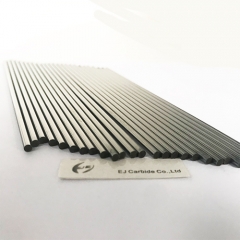
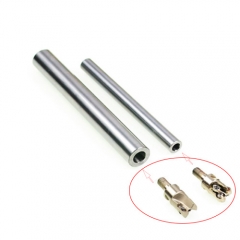
The anti-vibration tool holder is an important tool accessory in CNC machining. The purpose is to prevent the vibration of the tool, and to control the vibration of the tool, or to make the best possible ability to prevent the tool from vibrating. In the cutting process, the vibration of the tool is inevitable, so there is no way to change this fact, you should choose to use a tool holder that can play a vibration-resistant effect to control it.
The anti-vibration tool holder is used for deep hole machining (the ordinary tool holder exceeds a certain depth, and the tool will be broken or chipped due to bending and vibration). The difference between the machined anti-vibration tool holder and the ordinary tool holder is: The tuned mass damper is a passive dynamic system in form. In layman's terms, inside the handle, there is a vibration-absorbing device that is opposite to the vibration generated by the bending deformation of the handle, so it can absorb vibration and increase stability.
The anti-vibration tool holder is also called a CNC extension rod, especially the development of CNC precision machining. The traditional CNC machining changes from 5000 revolutions, 6000 to 8000 revolutions, and the more precise cutting speed will develop to more than 20,000 revolutions in the future. For such high-speed cutting, the rotational speed puts forward higher requirements for the use of the tool holder, and it must have sufficient seismic performance. To achieve the seismic performance required for such high-speed cutting operations, the carbide seismic tool holder must be of uniform material, consistency and precision Guaranteed concentricity.
If the tool cannot be well prevented from vibration, it will be easy to damage the tool. If the tool is broken, you need to install a new tool, which not only delays working hours but also increases industrial costs. Therefore, in industrial processing, the vibration-resistant tool holder The choice is very important. Some people say that the cost of this tool holder is relatively high, but from another perspective, if you do not choose to use this special tool holder, the cost of the damaged tool will be even higher. In fact, it is a truth. Yes, and frequent tool replacement will affect the processing process of the factory, not only delaying the work progress but also affecting the completion speed, which has a great impact on the production efficiency of the enterprise.
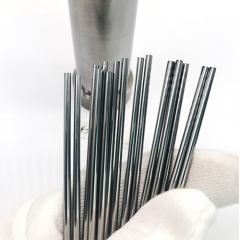
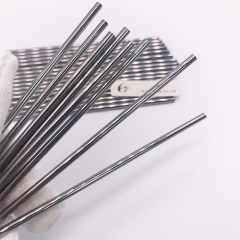
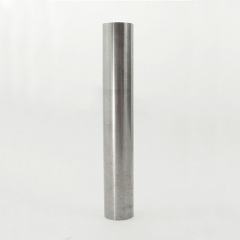
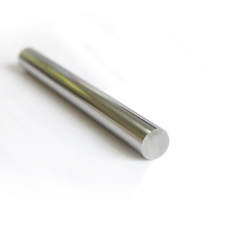
In the machining industry, the vibration of CNC tools is the main problem of machining, because this kind of mechanical vibration is inevitable. In addition, after this kind of mechanical vibration acts on the mechanical workpiece, the precision of the workpiece will be greatly reduced, and the workpiece may even be scrapped. How to control and solve this kind of mechanical vibration has become an important issue in the machining industry. Under such a background, CNC tools need a special shock-resistant cemented carbide tool holder, which makes full use of cemented carbide. In order to facilitate users and save user costs, the lock-tooth design is used to liberate the operating space of the CNC tool head. The cemented carbide anti-vibration tool holder adopts a solid carbide round bar for one-time processing to ensure the hardness The integrity of the alloy material allows the alloy material to have the characteristics of high hardness and small deformation. The stability rate of the processed workpiece is more stable than that of ordinary steel tool holders, and the mechanical vibration value is reduced. The tungsten carbide anti-vibration tool holder has a large aspect ratio. This design can make the anti-seismic alloy tool holder more suitable for the difficult and high seismic requirements of small diameter and deep hole machining.
1. Made of full tungsten carbide material, excellent rigidity, good shock absorption, and will not be distorted due to excessive lateral force.
2. Extend the processing depth and improve the accuracy of the processing surface.
3. There is no worry about welding fracture, and the variability of the cutter head is emphasized. A cemented carbide tool holder can reach dozens of combinations, which can cover all processing requirements from rough to fine.
4. The cutter head and the cutter rod are connected by thread, and the direction of the spindle is reversed.
5. Even if the cutter head is damaged, the cutter bar can be reused! And the cutter head can be changed conveniently and quickly on the machine tool.